
Internet radio audience growth strategies are proven, integrated methods that combine SEO, social media, content repurposing, directory distribution, and listener engagement to build a sustainable and loyal listenership. The industry term for this approach is multi-channel audience development, and it applies whether you run a community station, a niche music channel, or a talk-format broadcast. Sources including RadioSiteMaker and Radio Content Pro confirm that no single tactic delivers lasting growth on its own. The stations that grow consistently treat every broadcast as a content opportunity across multiple platforms, and they commit to the process for months, not weeks.
1. internet radio audience growth strategies: start with SEO
Search engine optimisation is the foundation of long-term discoverability for any internet radio station. Most stations neglect it entirely, which means those that do it well gain a significant and compounding advantage over time.
The most effective SEO approach for radio stations involves dedicated show and DJ pages targeting long-tail keyword queries. A page titled "Late Night Jazz Radio Show" or "Sunday Morning Soul with DJ Marcus" can rank for searches that a generic homepage never will. Each page should carry a unique meta title and description that includes your station name, genre, and broadcast time.

Associating your stream URL correctly is equally important. SEO for radio stations commonly fails when stations lack clear stream URL associations, which prevents search engines from indexing broadcast content properly. List your stream URL on every relevant page and submit it through Google Search Console.
Publishing blog content about local music scenes, upcoming events, and genre news also drives organic traffic. A community station covering Bristol's independent music scene, for example, can attract readers who become listeners through well-targeted local search terms.
- Create individual pages for each show and presenter
- Write meta titles using the format: [Show Name] | [Genre] | [Station Name]
- Publish at least two blog posts per month covering local or genre-specific topics
- Submit your stream URL to Google Search Console and Bing Webmaster Tools
- Use schema markup to help search engines identify your station as an audio broadcaster
Pro Tip: Use Google Search Console's performance report to identify which queries already bring visitors to your site. Build dedicated pages around those exact terms to accelerate ranking.
2. repurpose every broadcast across digital channels
Content repurposing is the most efficient way to multiply your audience touchpoints without producing entirely new material. Radio Content Pro describes a repurposing loop that turns a single broadcast moment into 5–6 distinct audience touchpoints across social media, your website, and email.
The process works like this:
- Record every live show and archive it as a podcast episode for on-demand listeners
- Clip the most engaging two to three minutes from each show and post it as a short video or audio snippet on social media
- Write a brief blog post summarising the show's highlights, guest interviews, or playlist
- Send a weekly email newsletter featuring show recaps, upcoming schedules, and listener highlights
- Cross-post clips to platforms where your genre audience already spends time, such as YouTube or SoundCloud
Email newsletters deserve particular attention. Stations with active newsletters report stronger listener retention and direct conversions to digital advertising. A consistent format and a fixed send day train your audience to expect and open your emails. Think of the newsletter as your most direct line to your most loyal listeners.
Pro Tip: Batch your repurposing tasks immediately after each broadcast. Spend 20 minutes clipping, captioning, and scheduling posts while the content is fresh. This habit prevents the backlog that kills most repurposing efforts.
3. submit to online radio directories and smart speaker platforms
Directory submissions are the fastest route to new listeners. Directory submissions can deliver listeners within days, which is considerably faster than the compounding timeline of SEO. Every station should treat directory registration as a day-one priority.
The key platforms to target include:
- TuneIn — one of the most widely used internet radio directories globally, with a large existing listener base
- Radio Garden — a geography-based discovery tool that attracts curious listeners browsing by location
- Streema — a directory with strong search functionality that surfaces stations by genre and location
- iHeart Radio — relevant for stations targeting North American audiences
- Amazon Alexa Skills — register your station so listeners can say "Alexa, play [Station Name]" and tune in instantly
- Google Home — submit your stream so it appears in Google Assistant voice search results
Publishing podcast versions of your top shows on Apple Podcasts and Spotify creates an additional discovery funnel. Listeners who find your podcast may convert to regular live stream listeners over time. This approach also expands discoverability across smart speaker and podcast platforms simultaneously.
Cross-promotion with other stations in complementary genres is an underused tactic. A station specialising in reggae and one covering world music share audience overlap without competing directly. A simple shout-out exchange or shared social post costs nothing and reaches an already-engaged radio audience.
4. build listener loyalty through active engagement
Engaged listeners are your most effective marketing channel. They share content, recommend your station to friends, and return consistently. Interactive features including live chat, on-air dedications, and call-in shows build the kind of loyalty that passive broadcasting cannot achieve.
Practical engagement methods that work:
- Live chat integration on your website or app lets listeners interact with presenters in real time during broadcasts
- On-air dedications and requests give listeners a personal stake in the programme, making them feel heard and valued
- Call-in segments create authentic, unscripted moments that distinguish internet radio from playlists and streaming services
- Listener polls and votes on social media, such as choosing the next featured artist or debating a music topic, extend engagement beyond the broadcast window
- Community groups on platforms like Facebook or Discord give your most loyal listeners a space to connect with each other and with your team
Analysing listener analytics is equally important. Most streaming platforms and website tools provide data on peak listening times, geographic distribution, and device usage. Use this data to schedule your strongest shows during peak hours and to tailor content to where your audience actually is.
Pro Tip: Even an audience of 100–200 regular listeners has real commercial value. Niche advertisers find small, highly targeted audiences attractive. Start with traded promotions and build towards paid sponsorships as your numbers grow.
For a deeper look at how audience engagement strategies translate into measurable growth, the principles apply directly to internet radio community building.
5. use social media as a discovery and retention tool
Social media serves two distinct purposes for internet radio: attracting new listeners and keeping existing ones engaged between broadcasts. Most stations use it only for the first purpose and miss the retention opportunity entirely.
Instagram and TikTok work well for short audio-visual clips from shows, particularly for music-led stations. A 30-second clip of a live session or a presenter's reaction to a breaking music story can reach thousands of non-listeners through algorithmic distribution. Facebook remains effective for community-oriented stations where groups and events drive regular interaction. X (formerly Twitter) suits stations with strong opinion or talk formats where real-time commentary adds value.
Consistency matters more than volume. Posting three times per week on two platforms outperforms posting daily on five platforms with no clear strategy. Align your social content calendar with your broadcast schedule so that posts build anticipation for upcoming shows and recap what listeners missed.
Paid social advertising is worth considering once you have a clear picture of your listener demographics. A modest budget targeting users by location, age, and music interest can accelerate growth during a station launch or a new show rollout.
6. comparing audience growth tactics: effort, speed, and impact
Different tactics deliver results on different timescales. Understanding this helps you allocate effort realistically and avoid abandoning strategies before they have had time to work.
| Tactic | Speed of Results | Effort Required | Typical Impact | Best Used For |
|---|---|---|---|---|
| Directory submissions | Days | Low | Immediate listener gains | Quick wins at launch |
| Smart speaker registration | Days | Low | Passive discovery growth | Expanding reach passively |
| Social media posting | Weeks | Medium | Steady incremental growth | Ongoing retention and discovery |
| Content repurposing | Weeks | Medium | Compounding touchpoints | Long-term audience depth |
| SEO and blog content | 3–6 months | High | Sustainable organic traffic | Long-term discoverability |
| Email newsletters | Ongoing | Medium | Strong retention and loyalty | Keeping existing listeners |
| Podcast publishing | Weeks to months | Medium | On-demand audience funnel | Reaching new demographics |
| Listener engagement | Ongoing | Medium | Loyalty and word-of-mouth | Reducing listener churn |
The table makes one pattern clear: the tactics with the highest long-term impact, particularly SEO and content repurposing, also take the longest to show results. Stations that combine quick-win tactics like directory submissions with sustained SEO and engagement efforts build the most durable audiences. No single column in this table represents a complete strategy on its own.
Key takeaways
Sustainable internet radio audience growth requires combining fast-win tactics like directory submissions with long-term strategies like SEO, content repurposing, and consistent listener engagement over a minimum of three to six months.
| Point | Details |
|---|---|
| SEO builds lasting discoverability | Create dedicated show and DJ pages with long-tail keywords and submit stream URLs to search engines. |
| Repurposing multiplies touchpoints | Turn each broadcast into podcast clips, social posts, blog content, and email newsletters for compounding reach. |
| Directories deliver fast results | Submit to TuneIn, Radio Garden, and Streema plus smart speaker platforms to gain listeners within days. |
| Engagement drives loyalty | Live chat, dedications, and call-in shows build the community that sustains and grows your audience. |
| Persistence is non-negotiable | Most audience growth materialises after 3–6 months of consistent effort; quitting early forfeits that momentum. |
Why patience is the strategy most stations ignore
I have worked with broadcasters at every scale, from single-presenter community stations to multi-channel networks, and the pattern that ends more growth efforts than any technical failure is impatience. Most stations quit early despite audience growth typically materialising only after sustained effort over several months. That is not a motivational observation. It is a practical warning about where most strategies actually fail.
The stations I have seen grow consistently share one habit: they treat every broadcast as a content factory. The show does not end when the microphone goes off. It becomes a podcast episode, a social clip, a newsletter section, and a blog post. That discipline compounds over time in a way that no single tactic can replicate.
The other mistake I see regularly is treating tactics as separate projects rather than parts of one system. SEO, directories, social media, and engagement are not four strategies. They are four components of one strategy. When they feed each other, the effect is far greater than the sum of the parts. A blog post improves your SEO ranking, which brings a new listener, who joins your community group, who shares your social clip, which attracts another listener. That loop does not start on day one. It starts around month four, if you have been consistent.
My honest advice: set a six-month commitment before you evaluate results. Track your metrics weekly, adjust your content based on what the data shows, and resist the urge to pivot to an entirely new approach every time growth feels slow. The SEO engagement principles that apply to digital content broadly are just as relevant here. Build the system, trust the process, and give it time to work.
— Liam Burke
How broadcast radio supports your growth strategy
Growing an internet radio audience depends as much on reliable infrastructure as it does on marketing tactics. Broadcast Radio provides professional radio software and cloud services designed to support the full broadcast workflow, from content scheduling and programme automation to cloud streaming and multi-platform distribution.
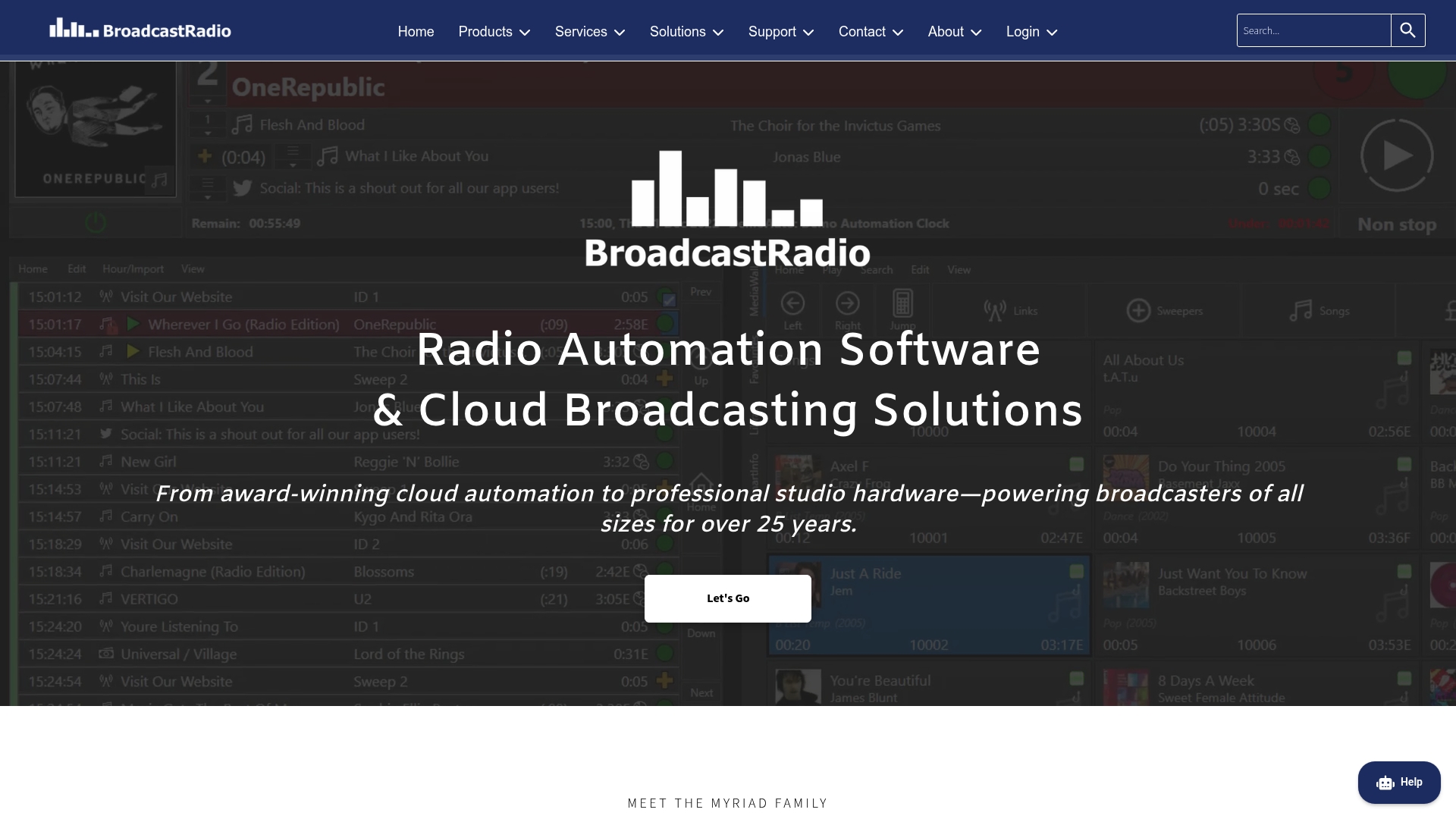
When your station runs on dependable technology, you can focus on the content and community work that actually drives listener growth. Broadcast Radio's tools support multi-channel content distribution, making it straightforward to push your audio to directories, podcast platforms, and streaming services from a single managed environment. Whether you are running a community station or scaling a network, the platform grows with you. Explore the full range of radio software and cloud services at Broadcast Radio to see how professional infrastructure supports every stage of your audience development.
FAQ
How quickly can directory submissions grow my audience?
Directory submissions can bring new listeners within days of registration. Platforms like TuneIn and Radio Garden have existing audiences actively searching for new stations by genre and location.
How long does SEO take to work for an internet radio station?
SEO typically takes 3–6 months of consistent effort before delivering meaningful organic traffic. Creating dedicated show pages, publishing regular blog content, and correctly listing your stream URL all contribute to faster indexing.
What is the most effective way to retain existing listeners?
Email newsletters are one of the strongest retention tools available. Stations with active newsletters report stronger listener loyalty and more consistent engagement between broadcasts.
Can a small audience generate revenue?
An audience of 100–200 regular listeners can attract niche advertisers who value targeted reach over raw numbers. Start with traded promotions and build towards paid sponsorships as your listenership grows.
Do i need to be on podcast platforms as well as live streaming?
Publishing podcast archives of your best shows on Apple Podcasts and Spotify creates an additional discovery funnel. On-demand listeners who find your podcast often convert to regular live stream listeners over time.